Why Freight Forwarders Lose Quotes Before They Even Answer: The 90-Hour Inbox Problem
Forwarding margins are decided in the inbox, in the minutes between a quote request and a credible answer. The average forwarder takes 90 hours to respond. This is how three agents close that gap.
 Nauta Team Supply Chain Strategy Experts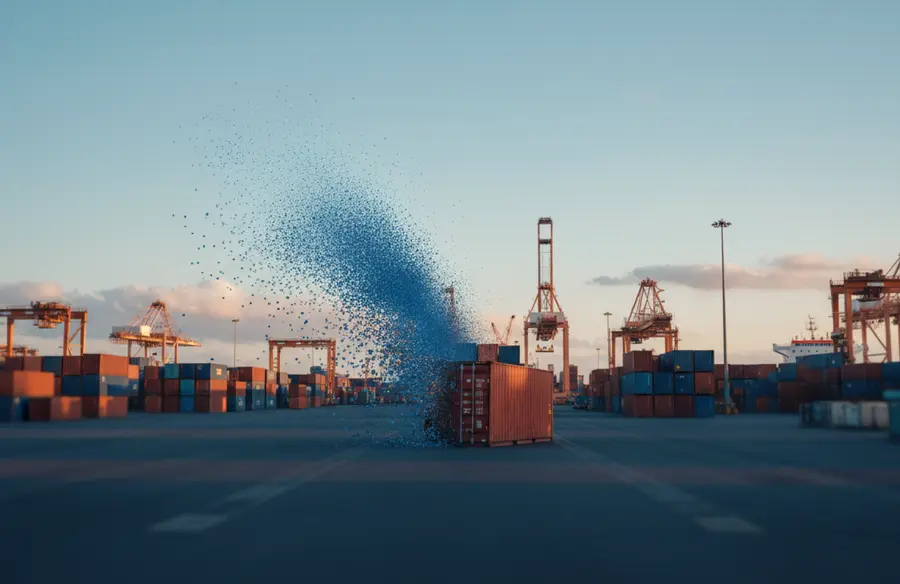
Forwarding margins are not decided at sea. They are decided in the inbox, in the minutes between when a shipper sends a request and when someone, anyone, sends back a credible number.
The average response time to an online quote request among top global forwarders is around 90 hours. Not 90 minutes. Nearly four full business days. And according to response-rate data from Rippey AI, only 31% of quote requests receive any response at all. The other 69% go unanswered.
At a median net margin of roughly 2.9%, freight forwarding leaves almost no room for operational waste. Losing quotes at the intake stage is not a minor inefficiency. It is a structural margin problem.
The Inbox Is Running Your Business, and It's Losing
Here is what most forwarding operations actually look like at scale: a pricing team that is perpetually behind, a shared inbox that functions as a queue, and a set of coordinators whose primary job is moving information from one place to another.
Roughly 30% of an operator's working day goes to handling email by hand. For order acknowledgements alone, one forwarder reported needing approximately 8 full-time people just to read incoming orders, key the line items, validate against rules, and confirm back to the customer. Not to move freight. Not to solve problems. Just to process paperwork.
That headcount scales directly with volume. In a business running on 2.9% margins, every additional hire to handle manual intake is a direct hit to the bottom line.
The problem is not that your team is slow. The process was designed for a volume that no longer exists.
The First Credible Quote Usually Wins
Shippers are not waiting. Research from cargorates.ai on operational factors driving quote win rates found that forwarders responding to RFQs in under 30 seconds see materially higher win rates, and users report a 45–50% improvement in quote wins from faster intake. Navixai.co's analysis of why forwarders lose quotes found up to a 6-point win-rate lift from faster response alone.
The pattern is consistent across sources: the first credible quote wins. Not the lowest rate. Not the most established relationship. The first complete, accurate pricing that lands in the shipper's inbox.
Your team is not losing on price. They are losing on time. By the time a coordinator pulls the request from the queue, checks current rates, applies the right margin rules, formats the quote, and sends it, the shipper has already awarded the cargo.
Why Existing Tools Don't Fix This
Most forwarding teams have a TMS. Many have a quoting module. Some have rate management software. None of it solves the response-time problem on its own.
The issue is not the absence of data. It is fragmentation. Rate sheets live in spreadsheets. Carrier confirmations come in by email. Customer preferences are in someone's head or buried in a thread from six months ago. The TMS holds some of it. The inbox holds the rest.
When a quote request arrives, a coordinator has to manually cross-reference all of it: check the lane, pull the current buy rate, apply the right margin, format the quote, send it. That process takes hours. Not because the team is inefficient, but because the data is scattered across systems that do not talk to each other.
Agents can only move as fast as the data underneath them. An AI that reads emails but cannot access live rates, margin rules, and customer history is not solving the problem. It is automating the confusion.
The Unified Layer That Makes Agents Useful
Nauta was built around a specific premise: agents are only as good as the operational context they can access. Before any automation touches a quote request or an order, Nauta connects the data from emails, spreadsheets, TMS, ERP, carrier portals, and customer touchpoints into a single AI-ready layer.
That unified layer is what makes the agents fast and accurate. They are not guessing. They are reading from a complete operational picture.
Three agents work off that layer for freight forwarding operations.
Lauren, the Supplier Watch Agent
Lauren reads every incoming quote request, checks current rates and margin rules, and drafts a branded quote in minutes. Not 90 hours. Minutes.
Your team sets the rules: which lanes auto-send, which ones require a review click before going out. Lauren does not send anything your team has not authorized. Every draft is visible. The coordinator approves and it goes, or they adjust and send. Either way, the shipper gets a response while the cargo is still available.
Nina, the Shipment Watch Agent
The second most common inbox flood in forwarding is WISMO: "Where is my shipment?" A coordinator pulls up the TMS, checks the carrier portal, cross-references the booking confirmation, and types back a status update. Repeat 40 times a day.
Nina answers those queries from live data across systems. She also proactively follows up with the carrier when tracking data goes quiet, before the customer has to ask. Your team sees only the exceptions that require a human decision. Everything else is handled.
Marcus, the Inventory Watch Agent
Order acknowledgement is where the 8-person manual process lives. Marcus extracts every line from an incoming order, validates it against the forwarder's rules and available capacity, and confirms or flags the order the same day it lands.
The reading, keying, checking, and confirming that used to take a team of coordinators hours per order, Marcus handles at intake speed. Exceptions surface for human review. Clean orders confirm automatically, within the rules your team has set.
Your Team Stays in Control
None of this is fully autonomous. The operator decides what goes out automatically and what waits for a click. Every action is visible in the workflow. Lauren does not send a quote your pricing lead has not cleared. Marcus does not confirm an order that breaks a rule.
The goal is not to remove your team from the process. It is to remove the manual legwork so your team can focus on decisions that actually require judgment: complex lanes, key accounts, exceptions worth escalating.
They make the call. They do not do the data entry.
What This Means for Margin
At 2.9% net margin, the math on inbox efficiency is direct. Winning 10 more quotes per month does not require hiring more coordinators; it requires responding faster to the requests already coming in. Reducing order acknowledgement from a team of 8 to a team of 2 is not a technology story. It is a margin story.
The 90-hour response time is not a technology gap. It is a data fragmentation problem, one that is solvable with the right operational layer underneath it.
Book a demo at getnauta.com to see how Lauren, Nina, and Marcus work inside a forwarding operation.
Frequently Asked Questions
What is the average response time for freight forwarder quote requests?
According to a Freightos response-time study cited by GoFreight, the average response time among top global forwarders is approximately 90 hours. Only around 31% of quote requests receive any response at all, based on Rippey AI data.
Why do freight forwarders lose quotes to competitors with higher rates?
Shippers typically award cargo to whoever responds first with complete, accurate pricing. Research consistently shows that response speed, not rate, is the primary driver of quote win rates in freight forwarding. A forwarder with a slightly higher rate who responds in minutes will win over a lower-rate competitor who responds in days.
How does AI help freight forwarders respond to quote requests faster?
AI agents can read incoming RFQs, check current rates and margin rules, and draft a branded quote in minutes. The key requirement is that the agent has access to a unified data layer of connected TMS, rate sheets, margin rules, and customer history, so the draft is accurate, not just fast.
What is WISMO and how do AI agents handle it?
WISMO stands for "Where is my shipment?" It is one of the highest-volume inbox categories in freight forwarding. Nina answers these queries from live data across systems and proactively follows up with carriers when tracking data goes quiet, reducing the manual load on coordinators before customers have to ask.
Does using AI agents mean losing control over what gets sent to customers?
No. The operator sets the rules for what goes out automatically and what requires a review step. Every action is visible. Agents draft and queue; your team approves or adjusts before anything reaches a customer, unless the team has explicitly authorized auto-send for specific workflows.
How many people does manual order acknowledgement typically require?
One forwarder reported needing approximately 8 full-time people just to handle order acknowledgements by hand: reading incoming orders, keying line items, validating against rules, and confirming back to customers. That headcount scales with volume and directly compresses margin in a business running on roughly 2.9% net.
What data does Nauta connect to power its freight forwarding agents?
Nauta ingests data from emails, spreadsheets, TMS, ERP, carrier portals, and customer touchpoints into a single AI-ready layer. Lauren handles quoting, Nina handles shipment tracking, and Marcus handles order acknowledgement, all operating from that unified context rather than from isolated data sources.
Keep reading
Revenue Leakage in Global Logistics: What Your TMS, ERP, and Email Aren't Telling You
Every global import operation runs on three layers that were never designed to talk to each other — and when they don't converge, revenue leakage starts.
Read more
The Scaling Problem Your Logistics Management Software Was Never Built to Solve
At what point does adding volume stop generating margin and start generating overhead? For most enterprise importers, that inflection point arrives before it's visible on a report.
Read more
The Financial Blind Spot in Your Supply Chain Visibility Software
Your visibility platform shows what's happening — but when a container arrives late, the financial consequences surface somewhere else, days after the window to act has closed.
Read more