AI in Logistics: 7 Practical Use Cases (2026)
An analyst-style overview of seven high-impact AI use cases transforming supply chains worldwide, each with real-world examples, research insights, and measurable business outcomes.
 Nauta Team Supply Chain Strategy Experts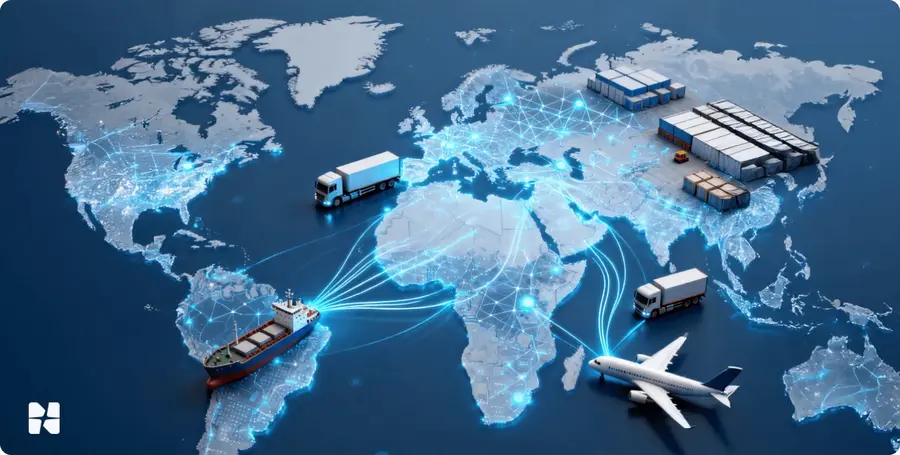
Artificial Intelligence (AI) is rapidly emerging as a game-changer in logistics and supply chain management. Across global supply chains, AI adoption is accelerating to meet demands for greater efficiency, resilience, and cost-effectiveness.
This growth is fueled by surging e-commerce volumes, complex global trade networks, and the need for real-time decision-making at scale.
Major industry surveys indicate that over a quarter of large logistics companies had adopted AI solutions by 2023, with investment in AI-powered logistics systems up 43% year-over-year. Early adopters report significant performance boosts – from 15-30% reductions in operating costs and inventory levels, to service level improvements above 60% – underscoring AI's transformative potential.
This report provides an analyst-style overview of seven high-impact AI use cases that are transforming supply chains worldwide. Each use case is described with real-world examples, research insights, and measurable business outcomes (cost savings, efficiency gains, service improvements, and resilience).
The seven use cases explored are:
1. Predictive Demand Forecasting and Planning: Using AI to accurately predict demand, align supply plans, and optimize inventory positioning. 2. Dynamic Route Optimization and Transportation Management: AI-driven routing for trucks and deliveries to minimize transit time, costs, and emissions. 3. Smart Warehouse Automation and Robotics: AI in warehouse operations (robotics, computer vision) to accelerate fulfillment and reduce errors. 4. Real-Time Supply Chain Visibility and Risk Management: Control towers and analytics that give end-to-end visibility, predict disruptions, and enable proactive mitigation. 5. Predictive Maintenance of Fleet and Equipment: IoT sensors and AI analytics to predict equipment failures and optimize maintenance schedules. 6. Autonomous Vehicles and Last-Mile Delivery Drones: Emerging use of self-driving trucks, AI-guided forklifts, and delivery drones to automate transport. 7. AI-Powered Process Automation and Decision Support: Automating repetitive logistics tasks (document processing, communications, customer service) using AI, including the integration of AI "copilots" and chatbots in operations.
Global Adoption and Outlook:
These AI applications are being embraced across North America, Europe, and Asia, with North America currently leading in investment. Industry leaders like Amazon, DHL, UPS, and Unilever have deployed AI solutions at scale, reporting double-digit percentage improvements in productivity and significant cost savings. Notably, about 60% of companies worldwide expect AI-driven automation (such as RPA) to fundamentally transform supply chains by 2025. As the case studies in this report show, AI is not a future vision but a present reality – delivering tangible benefits in forecasting accuracy, route efficiency, warehouse throughput, risk reduction, and more. Organizations that leverage these capabilities are seeing improved resiliency and competitiveness, especially critical in today's volatile logistics environment. The following sections delve into each use case in detail, illustrating how AI is redefining logistics operations and what business impact it brings.
Use case 1: AI-powered demand forecasting and supply chain planning
Accurate demand forecasting and supply chain planning form the foundation of efficient logistics. AI techniques – from machine learning predictive models to advanced analytics – are dramatically improving forecast accuracy and agility compared to traditional methods. AI-driven demand forecasting can reduce forecast errors by 20–50%, which McKinsey finds can translate into up to 65% fewer lost sales due to stock-outs and significant reductions in expediting and safety stock costs. Unlike static spreadsheet forecasts, AI models continually learn from historical data and real-time signals (seasonal trends, promotions, market data) to anticipate demand shifts in advance. This allows logistics planners to respond proactively – for example, adjusting inventory and staffing before a surge hits, rather than reacting afterward.
The business impacts are substantial. By improving forecast precision, companies can hold leaner inventories and still meet service levels. AI-enhanced planning often yields 20–30% reductions in inventory holdings while avoiding stock-outs. This frees up working capital and lowers warehousing costs. Better anticipation of demand also means fewer emergency shipments and a 5–10% drop in warehousing and freight costs through smoother operations. For instance, one distributor used AI-based demand sensing and a supply chain "control tower" to dynamically rebalance inventory across its network, improving order fill rates by 5–8% and cutting stock-outs. The AI control tower provided end-to-end visibility of inventory levels and automated recommendations, even employing a generative AI assistant to answer planners' questions from real-time data. This allowed the team to spend less time crunching numbers and more time on strategic decisions.
AI-driven supply planning goes hand-in-hand with demand forecasting. Self-learning algorithms can continuously adjust supply chain parameters, reorder points, replenishment frequencies, production schedules – based on the latest forecast and constraints. This adaptability leads to a more resilient and efficient supply chain. For example, AI systems can preemptively trigger procurement of materials if a future demand spike is predicted, or conversely delay orders if a downturn is signaled. Such dynamic planning minimizes both shortages and excess, aligning supply with demand in near real time. It also improves responsiveness to disruptions. Planners using AI tools gain better visibility into potential bottlenecks (e.g. a supplier delay or port congestion) and can simulate alternatives. In fact, new generative AI-based supply chain tools allow planners to run "what-if" simulations of various scenarios (e.g. facility closures, surge in regional demand), evaluating trade-offs between cost, speed, and risk. This capability strengthens risk management and contingency planning.
In summary, AI-powered forecasting and planning enable logistics organizations to operate with greater precision and agility. Companies report tangible outcomes: lower carrying costs, less leftover stock, improved on-time delivery, and reduced reliance on guesswork. By predicting customer needs more accurately and planning proactively, supply chains can shave off waste and improve service concurrently, achieving the long-sought ideal of doing more with less. As volatile market conditions and shorter product cycles make demand harder to predict, AI provides a critical tool to stay ahead of the curve.
Use case 2: AI in logistics route optimization and transportation efficiency
Transportation is one of the most cost-intensive aspects of logistics, and AI is fundamentally reshaping how shipments are routed from origin to destination. Traditional route planning – often static or based on limited heuristics – cannot easily handle the complexity of today's distribution networks (traffic fluctuations, multiple stops, time windows, vehicle capacities, etc.). AI-powered route optimization uses advanced algorithms (graph analytics, combinatorial optimization, even reinforcement learning) to compute highly efficient delivery routes and schedules. These systems ingest real-time data on traffic, weather, road restrictions, and orders, and can dynamically re-route fleets on the fly. For example, if an accident or port delay occurs, the AI can instantly recalculate new routes or re-sequence deliveries across the entire fleet within seconds, far beyond human planning capability.
The efficiency gains from AI-driven routing are well documented. DHL's AI route optimization engine, which analyzes 58 parameters (from driver hours to road conditions), reduced vehicle miles traveled by 15% and cut carbon emissions by 10% in trials. Fewer miles and optimized loads directly save fuel and labor costs. UPS famously reported that trimming just one mile per driver per day can save $50 million annually – underscoring the massive ROI from even small route improvements at scale. AI finds those savings by eliminating unnecessary detours, idling, or empty runs, and by consolidating loads intelligently. Transportation cost reductions of 5–15% are commonly achieved through AI route optimization and load pooling, while also speeding up delivery times and improving on-time performance. In addition, dynamic routing contributes to sustainability goals by lowering fuel consumption and emissions, a key benefit as companies focus on greener logistics.
Beyond route planning, AI is enhancing real-time transportation management. Advanced models provide dynamic Estimated Time of Arrival (ETA) predictions, continuously updated based on en-route conditions. This means shippers and end customers receive more accurate delivery updates, improving satisfaction. If delays beyond a threshold are likely, AI systems can trigger exception alerts to stakeholders (dispatchers, warehouse teams waiting on a truck, or even directly to customers). By proactively flagging delays or disruptions, logistics teams can respond (e.g. dispatch a backup vehicle, adjust unloading schedules) rather than being caught off guard. AI also helps optimize multi-stop routes under complex constraints – such as delivering to dozens of locations while respecting each customer's delivery time window, driver hour limits, and vehicle capacities. These multi-stop optimization engines ensure compliance with service commitments while minimizing total distance and stops. The result is fewer late deliveries and better asset utilization.
Real-world examples illustrate the value. Logistics providers in parcel delivery, retail distribution, and field service are widely adopting AI routing tools. Many report that drivers can handle more deliveries per shift with less overtime, thanks to smarter sequencing. Route optimizers also cut planning time dramatically – what used to take human dispatchers hours of manual mapping can be done by AI in moments, allowing planners to focus on exceptions and customer communication. In summary, dynamic routing AI improves the speed, cost-efficiency, and reliability of transportation networks. This use case is pivotal in an era of tight delivery SLAs (service-level agreements) and rising fuel costs. By finding the optimal path for every truck and every parcel, AI is helping supply chains move goods smarter and faster.
Use case 3: AI warehouse automation and robotics in logistics
Warehousing operations are being revolutionized by AI and automation technologies. In large distribution centers and fulfillment warehouses, AI powers a range of solutions – from autonomous mobile robots shuttling goods, to computer vision systems inspecting inventory – all aimed at increasing throughput, accuracy, and safety. Companies are heavily investing in warehouse robotics to automate repetitive physical tasks like picking, packing, sorting, and palletizing. For example, Amazon has deployed over 200,000 autonomous robots in its warehouses to assist with moving inventory pods and orders, working alongside human associates. These AI-guided robots drastically reduce the time to stow or retrieve items and allow warehouses to handle much greater order volumes, especially during peak seasons. By integrating advanced robots, Amazon and others have improved operational efficiency, lowered per-unit fulfillment costs, and enhanced their ability to manage surges in demand.
The performance improvements from AI-enabled warehouses are striking. Studies show that facilities using AI-driven warehouse management systems and automation see productivity boosts of 25–40% and up to 90% fewer errors in order picking and inventory counts compared to traditional setups. Automation minimizes human errors like mis-picks or data entry mistakes, thereby improving order accuracy and reducing costly returns. At the same time, robots and AI scheduling can extend effective working hours (24/7 operation) without increasing labor, yielding more throughput. One major 3PL (third-party logistics provider) even utilized an AI "digital twin" simulation of its warehouse network to optimize capacity, increasing effective warehouse space utilization by nearly 10% without new construction. By modeling labor and equipment usage hour-by-hour with machine learning, the system identified bottlenecks and fine-tuned processes to use existing space more efficiently.
AI also enhances inventory management and quality control inside warehouses. Computer vision inspection systems can automatically detect product damage or packaging defects on conveyor lines, something that is time-consuming and error-prone for manual inspectors. For instance, AI vision algorithms can scan items for dents, leaks, or other anomalies at high speed, immediately flagging any suspect goods for removal. This prevents damaged products from reaching customers and saves costs by addressing issues early. Vision systems can likewise monitor pick/pack operations – if an item is mis-placed or labeled incorrectly, the AI can catch it by comparing against expected images or scanning barcodes, thereby ensuring a higher quality standard across the fulfillment process. Additionally, warehouses are experimenting with drones or camera-equipped robots for automated inventory audits. Instead of manual cycle counts, AI-powered cameras periodically sweep warehouse racks to count stock (using object recognition to identify SKUs and quantities). This provides real-time inventory visibility with far less labor, and flags any discrepancies or misplaced items immediately. Greater inventory accuracy means fewer stock-outs or overstock situations.
In summary, AI in the warehouse is driving automation, accuracy, and speed. Real-world outcomes include faster order fulfillment (supporting next-day or same-day delivery expectations), lower labor costs per unit shipped, and improved safety by letting robots handle dangerous lifting tasks. Importantly, the collaboration between humans and AI-driven machines is a key success factor – in Amazon's fulfillment centers, for example, human workers focus on tasks requiring fine motor skills or judgment, while robots handle the heavy transport and fetching. This synergy has enabled Amazon and others to ship millions of orders daily with high precision. As costs of robotics fall and AI algorithms improve, warehouse automation is becoming accessible even to mid-sized logistics operations. The trend is global, with advanced warehouses in North America, Europe, and Asia all adopting AI-guided automation to stay competitive in the race for efficiency and speed.
Use case 4: Real-time supply chain visibility with AI-driven risk management
Complex supply chains spread across multiple tiers of suppliers and carriers often suffer from a lack of end-to-end visibility. In fact, 43% of organizations report limited or no visibility even into their Tier-1 supplier performance, let alone deeper tiers. This opacity makes it difficult to anticipate disruptions – whether it's a delay at a manufacturing partner, a port closure, or a quality issue at a sub-supplier – until after problems manifest. AI is addressing this challenge through real-time supply chain visibility platforms (control towers) and predictive risk analytics. An AI-powered control tower aggregates data streams across the supply chain: ERP and WMS data for inventory, transportation management system (TMS) data for shipments, IoT sensor and GPS data for in-transit trucks, even external data like weather or news feeds. By analyzing these signals, AI can detect early warning signs of trouble – for example, a pattern of carrier delays, a looming severe weather event, or a sudden spike in supplier lead times. Natural Language Processing (NLP) models can even parse unstructured information like emails or port notices to extract relevant status updates.
The result is a centralized "nervous system" for the supply chain that gives human operators real-time, actionable insights. Instead of manually checking dozens of systems and emails, teams get immediate alerts with prescriptive recommendations when anomalies occur. For instance, if AI predicts a critical shipment will be 48 hours late (due to trend of delays and current en-route data), the control tower might suggest rerouting options or shifting production schedules accordingly. Risk management becomes proactive rather than reactive – companies can mitigate issues (expedite a replacement shipment, activate a backup supplier) before customers are impacted. This responsiveness was hard to achieve at scale before AI. One global manufacturer implemented an AI-driven supply chain control tower that provided end-to-end visibility and early risk detection; they credit it with avoiding numerous stock-out events and maintaining service levels during disruptions like extreme weather. In another case, a major distributor's control tower helped them identify inventory imbalances early and coordinate fixes across warehouses, contributing to a 5–8% fill rate increase.
AI-based risk scoring and simulation further enhance resilience. Advanced analytics platforms now combine internal supply chain performance data with external intelligence (economic indicators, supplier financial health reports, geopolitical news). By scanning news and financial reports, AI can flag emerging supplier risks – e.g., signs of financial distress or political instability that could threaten a vendor's reliability. Each supplier or lane can be given a risk score that is continuously updated. This enables supply chain managers to prioritize contingency planning where risk is highest – qualifying alternate suppliers for a high-risk part, or increasing safety stock in a region facing possible disruption. For example, Unilever deployed an AI-driven supplier management platform analyzing data on 100,000+ suppliers across 190 countries, which helped reduce supply disruptions by 17% and lower procurement costs by 4% by identifying issues early and optimizing sourcing decisions. Predictive analytics can also forecast broader disruptions: models can simulate the impact of, say, a port strike or a sudden demand spike, giving companies a chance to prepare. Some leading firms integrate these AI insights into digital twin simulations of their supply chain, allowing them to virtually test adjustments (rerouting freight, reallocating inventory) to see how the network would cope before implementing changes. This kind of scenario planning greatly improves preparedness.
In summary, AI is providing unprecedented visibility and foresight across the supply chain. By breaking down data silos and monitoring signals continuously, AI-driven systems help logistics professionals catch problems before they snowball. The business impact is seen in higher service reliability, fewer costly surprises, and stronger supply chain resilience. In an era of frequent disruptions – from pandemics to port congestions – such tools are becoming indispensable. Companies that leverage AI for supply chain visibility are better equipped to maintain customer commitments and optimize costs even amid volatility, turning a traditionally reactive function into a proactive strategic advantage.
Use case 5: Predictive maintenance in logistics fleets and equipment using AI
Logistics operations rely heavily on physical assets – trucks, delivery vehicles, forklifts, conveyor systems, container handling equipment, etc. Unexpected breakdowns of these assets can wreak havoc on supply chains (missed deliveries, halted production, costly emergency repairs). Predictive maintenance is a powerful AI use case that minimizes such disruptions by forecasting equipment failures before they happen. It works by continuously analyzing data from sensors (IoT devices) embedded in machinery and vehicles: temperature, vibration, engine performance, error logs, and more. Machine learning models learn the normal operating patterns and can detect subtle anomalies or trends indicating an impending failure – for example, a certain vibration frequency pattern that in the past preceded a motor breakdown. This allows maintenance teams to intervene at just the right time (e.g. replacing a part during planned downtime) rather than reacting to a failure in the field.
The benefits of AI-driven predictive maintenance are significant in terms of reducing downtime and maintenance costs. Manufacturers and logistics providers using these techniques have reported up to 40% reduction in unplanned downtime and about 25% lower maintenance expenses. By fixing issues proactively, companies avoid the ripple effects of breakdowns: late shipments, overtime labor for emergency fixes, expedited freight, and unhappy customers. For instance, FedEx implemented predictive analytics on its aircraft maintenance data and was able to increase fleet availability by 15%, meaning more planes were mission-ready at any given time to meet delivery schedules. In trucking fleets, AI systems monitor engine health, tire pressure, fuel usage anomalies, etc., and can schedule repairs before a roadside failure occurs, thereby improving on-time delivery performance and extending vehicle life. One global mining and logistics firm, DINGO, enhanced its predictive maintenance by partnering with AI researchers – within a few months they achieved measurable results in preventing equipment failures and managing billions in assets more effectively.
Predictive maintenance AI also optimizes maintenance scheduling and spare parts management. Rather than fixed service intervals or guesswork, maintenance can be performed exactly when needed. This often yields a more efficient maintenance cycle – neither too early (which wastes part life and labor) nor too late (after damage is done). It also helps in parts inventory optimization: the system can predict which parts are likely to fail soon across the fleet and ensure those spares are on hand, avoiding long waits for ordered parts. In large warehouse operations, predictive maintenance is applied to conveyor belts, sorters, and automated storage systems – minimizing any facility downtime that could delay shipments. IoT sensor data (e.g. motor temperature, belt tension) feeds AI models that alert technicians to service a conveyor before it breaks and halts the fulfillment line. All of this contributes to a more reliable and resilient supply chain with fewer operational surprises.
In summary, predictive maintenance is a mature AI application delivering clear ROI in logistics. It improves asset utilization, reduces breakdown incidents, and lowers overall maintenance spend. By leveraging sensor data and machine learning, logistics operators transition from a reactive "fix it when it breaks" mode to a proactive maintenance strategy. This not only saves money but also strengthens the ability to meet delivery commitments – a truck that doesn't break down on the road is one that arrives on time. As supply chains continue to digitize, expect predictive maintenance to become standard practice, ensuring that the critical machinery behind logistics keeps running smoothly with minimal unplanned interruptions.
Use case 6: Autonomous vehicles and drones, the future of AI in logistics
Perhaps the most futuristic application of AI in logistics is the advent of autonomous vehicles and delivery drones. Self-driving trucks, vans, and warehouse forklifts guided by AI promise to transform freight transport by reducing reliance on human drivers and enabling 24/7 operations. In warehouses, autonomous forklifts and pallet movers (often guided by AI vision and sensors) are already shuttling goods with minimal human intervention, improving safety and efficiency. On the roads, multiple companies (Tesla, Waymo, Daimler, Volvo, etc.) are testing autonomous trucks equipped with AI driving systems. These trucks use deep learning to perceive road conditions, computer vision for lane-keeping and obstacle detection, and advanced decision algorithms to drive with little or no human input. In controlled environments or long highway stretches, self-driving trucks can operate continuously, potentially doubling utilization compared to human-driven trucks limited by duty hour regulations. This could alleviate driver shortages in the trucking industry and cut transit times.
However, full autonomy at scale is still on the horizon. According to BCG, only around 10% of light trucks may be driving autonomously by 2030, reflecting the gradual pace of adoption due to technical, regulatory, and safety challenges. Early deployments are focusing on specific use cases – for example, "platooning" technology allows a convoy of semi-autonomous trucks to follow a lead driver closely, reducing drag and fuel consumption while still keeping a human in the loop for safety. This shows how AI can augment drivers rather than replace them outright in the near term, improving fuel efficiency and driver comfort on long hauls. Meanwhile, AI-guided delivery drones are being trialed for last-mile logistics in remote or congested areas. Drones use autonomous navigation algorithms, GPS, and computer vision to fly from distribution points to drop-off locations. A notable example is DHL's "Parcelcopter" drone project in Africa: it successfully delivered medicine to a remote village, covering 60 km in just 40 minutes. Drones can reach locations that are hard for trucks to access (e.g. islands, disaster zones, or areas with poor roads) and do so much faster than ground transport in some cases. They also operate without human pilots for the most part, overseen by automated systems.
The impact of autonomous vehicles and drones on supply chains could be transformative. Labor cost reduction is one driver – trucking and delivery are labor-intensive, so automation could eventually cut costs once technology matures (though upfront investments are high). There's also potential for faster delivery times and more flexible on-demand logistics, since autonomous assets could be dispatched at any hour and take optimized routes without breaks. For instance, a network of self-driving delivery vans could enable late-night or early-morning e-commerce deliveries in urban areas with minimal additional cost. Drones might establish rapid delivery lanes for urgent medical supplies or time-sensitive parts. In ports and yards, autonomous trucks and equipment can streamline container movements and reduce bottlenecks. Many large logistics providers are already incorporating semi-autonomous equipment: automated guided vehicles (AGVs) handle container transport in advanced ports; AI-powered yard trucks move trailers autonomously within large distribution campuses.
It's important to note that widespread adoption will depend on regulatory approvals, public trust in safety, and proven reliability. As of 2025, we are seeing incremental progress: pilot programs, limited autonomy on highways, and autonomous warehouse vehicles becoming mainstream. The logistics sector is a leading domain for these experiments, given the clear business case in areas like long-haul trucking and controlled facility environments. Over the next decade, experts anticipate increasing integration of autonomous elements – perhaps starting with specific geographies or private routes – gradually scaling to broader use. In conclusion, while autonomous vehicles and drones are an emerging use case, they represent a significant frontier where AI could truly transform supply chains through automation of transport. Even as the rollout is cautious, each successful pilot (like the DHL drone flights or Waymo's autonomous freight lanes) brings the industry one step closer to a future where goods move ubiquitously with minimal human intervention.
Use case 7: AI automation in logistics processes and decision-making
Not all transformative AI applications in logistics involve physical movement of goods – a great deal of impact comes from automating the information workflows and decision processes that coordinate the supply chain. Logistics operations are notoriously burdened by manual, repetitive processes: endless emails, spreadsheets, form entries, and status checks. AI-powered process automation is alleviating this by handling routine tasks with speed and accuracy, allowing human staff to focus on higher-value work. For example, document processing automation uses AI (including Optical Character Recognition and Natural Language Processing) to extract and manage data from the flood of paperwork in logistics. Bills of lading, invoices, customs forms, and shipping notices often arrive as PDFs or emails and used to require manual re-keying into systems. Now, AI systems can read these semi-structured documents, identify key fields (e.g. addresses, item codes, quantities), validate them, and input them directly into TMS/ERP databases. This cuts processing time and errors dramatically – what once took many staff hours can be done in seconds, with far fewer typos or missed entries. The payoff is faster throughput (e.g. getting customs clearance documents processed quickly to avoid port delays) and reduced labor costs on back-office administration.
Survey data shows that industry leaders are betting on automation: 60% of companies globally expect robotic process automation (RPA) and AI to transform their supply chains by 2025. In logistics, RPA bots augmented with AI can handle tasks like scheduling shipments, updating tracking information, generating routine reports, and even composing standard email responses. Hyperautomation – the end-to-end automation of complex workflows using a mix of AI, RPA, and process mining – has been applied to scenarios such as order scheduling and freight billing. For instance, an AI bot might automatically consolidate daily shipment data, create a delivery performance report, and email it to stakeholders without human input. By offloading such tasks, companies reduce the risk of human error and free up operations teams for strategic activities like carrier negotiations or network planning. One logistics provider reported that implementing AI-based automation in their billing and document handling cut their manual workload by over 70%, enabling them to scale business without adding headcount.
Another area of impact is AI in customer service and exception management. Logistics companies receive countless queries: "Where is my order?", "Can I change the delivery address?", "Our shipment is delayed – what's the ETA?" AI-powered conversational agents (chatbots) can handle a large portion of these routine inquiries instantly. Integrated with real-time shipment databases, a chatbot can automatically provide tracking updates or allow a customer to reschedule a delivery via a simple chat interface. This 24/7 responsiveness improves customer satisfaction while reducing the load on call centers. In fact, conversational AI is rapidly being adopted in last-mile and e-commerce logistics operations to handle common support tasks. When issues are more complex, the AI assistant can seamlessly hand off to a human agent along with context, improving efficiency. AI can also triage incoming emails from partners or customers – using NLP to understand the request and either responding automatically or routing it to the right person. This kind of intelligent triage is invaluable in operations that deal with dozens of email threads and updates daily.
Decision support AI ("AI copilots") is an emerging trend in logistics automation. These are AI systems (often powered by advanced language models and real-time data integration) that act like virtual assistants for logistics planners and coordinators. For example, an AI copilot might observe that a certain dock at a warehouse is running behind schedule and proactively suggest reassigning some trucks to another dock, or it might answer a planner's question like "Why is shipment ABC delayed?" by pulling up data on weather or carrier issues. By providing recommendations in natural language, AI copilots help human decision-makers work faster and make more informed choices. They don't replace the humans, but rather augment them by sifting through data and highlighting key insights on demand. This trend aligns with the goal of empowering logistics professionals with AI rather than just automating behind the scenes.
A notable example in this domain is Nauta, a logistics automation platform that leverages AI to streamline daily operational workflows. Nauta's system integrates with email and other data sources to act almost like a "digital super-operator" that automates up to 75% of routine tasks for logistics teams. It uses AI and rule-based logic to interpret emails, update shipment statuses, trigger next steps, and facilitate team collaboration, essentially handling the grunt work of coordination. By eliminating so much manual effort, Nauta enables operations staff to concentrate on strategic problem-solving and customer needs. As Nauta's value proposition suggests, the goal is to "unlock logistics teams' potential by automating workflows," letting people focus on what really moves the business forward. This kind of AI-driven automation platform exemplifies how vendors are packaging AI for direct use in logistics operations, bringing immediate efficiency gains without requiring in-house AI development.
Overall, AI-powered process automation and decision support are transforming the logistics back-office and control room. The tangible outcomes include faster administrative cycles (e.g. quicker billing, faster freight tenders), higher accuracy in data handling, lower overhead costs, and more agility in responding to operational changes. Equally important, these tools reduce the mundane workload on human employees, contributing to better job satisfaction and enabling teams to be more proactive and analytical. As logistics grows more complex, the marriage of AI and automation is proving crucial to handle the scale and speed required. This use case underscores that the AI revolution in supply chains is not only about robots and vehicles, but also about augmenting human decision-making and automating the informational glue that holds supply chain activities together.
Key takeaways: The future of AI in logistics and supply chain innovation
AI is ushering in a new era for logistics and supply chain management – one characterized by data-driven decisions, automation of both physical and cognitive tasks, and enhanced agility from end to end. The seven use cases discussed illustrate that AI's impact spans the entire value chain, from planning and forecasting, through transportation and warehousing, to back-office execution and customer service. A common theme is measurable improvement: companies adopting AI in these areas report lower costs, higher productivity, better service levels, and greater resilience to disruptions. In essence, AI enables supply chains to do more with less – moving goods more efficiently, keeping inventory lean yet sufficient, anticipating issues before they escalate, and responding rapidly to change.
Key takeaways from this deep dive include:
AI Delivers Tangible ROI: Early adopters have seen inventory levels drop by 20–35%, logistics costs fall 5–15%, and service performance improve significantly. These gains come from higher forecast accuracy, optimized routes, automated tasks, and data-driven decisions that cut out waste and errors.
Improved Efficiency and Cost Savings: Whether it's routing trucks in fewer miles or using robots to speed up picking, AI is driving efficiency. For example, route optimization reduced miles and fuel usage by double-digit percentages for DHL, and AI warehouses have achieved 25–40% productivity boosts with up to 90% error reduction. These efficiencies directly translate to lower operating costs and higher throughput.
Enhanced Resilience and Risk Management: AI-powered visibility tools and predictive analytics help companies anticipate and mitigate disruptions. Real-time control towers and risk scoring allow proactive actions (rerouting shipments, sourcing alternatives) that keep supply chains running smoothly despite volatility. This improves reliability and customer trust even in uncertain conditions.
Automation of Repetitive Tasks: AI is freeing logistics personnel from manual drudgery. From document processing bots that handle paperwork in seconds to chatbots answering routine customer queries 24/7, automation increases capacity without adding headcount. One survey found 60% of companies expect RPA/AI to transform their supply chain processes by 2025 – a clear indication of where the industry is headed.
New Capabilities and Innovation: AI isn't just about doing the same things faster – it also unlocks new capabilities. Predictive maintenance analytics allow maintenance strategies never before possible (fixing things right before they fail). Generative AI enables scenario planning at a scale and speed humans alone could not do. Autonomous vehicles and drones, while emerging, herald a future of on-demand, around-the-clock logistics capabilities beyond human limitations.
Global and Strategic Priority: The adoption of AI in logistics is a global phenomenon, with North America currently leading but other regions accelerating fast. Companies across industries (retail, manufacturing, 3PLs, etc.) are investing in AI to gain a competitive edge in their supply chain. In a recent global survey, 44% of executives using AI in supply chain noted cost reductions as a result. AI is now appearing in strategic roadmaps and C-suite agendas, not just experimental labs.
In conclusion, AI in logistics has moved from buzzword to business imperative. The seven use cases discussed are no longer theoretical – they are being implemented by leading organizations to solve real operational challenges. While there are still hurdles (data quality, change management, talent gaps) in scaling AI across all logistics functions, the trajectory is clear. Supply chain professionals should begin piloting and integrating AI solutions in the areas of highest payoff, build internal capabilities, and foster a culture of data-driven decision-making. The case studies and research data show that those who embrace AI early can achieve superior service and efficiency, positioning themselves well ahead of competitors who are slower to adapt. Ultimately, AI is enabling the intelligent, agile, and automated supply chain that has long been aspired to – transforming logistics from an obstacle course of inefficiencies into a strategic asset for businesses worldwide. By leveraging AI's strengths in prediction, optimization, and automation, supply chain leaders can navigate the growing complexity of global logistics with precision and confidence. The time to act is now, as AI continues to rapidly reshape the logistics landscape and define the future of supply chain management.
Sources: Straits Research – AI in Logistics Market Size & Outlook (2024–2032) | McKinsey & Co. – Harnessing the power of AI in distribution operations | McKinsey & Co. – AI-driven forecasting in supply chain management | Sphere Research – AI in Logistics and Transportation: 25+ Use Cases | AIMultiple – Top AI Use Cases in Logistics | Code Brew – AI in Supply Chain: Benefits and Applications | SPD Technology – AI in Logistics: Game-Changer for Transportation | KPMG – Supply Chain Trends 2024: Visibility and Data
👉 Book a demo with Nauta to see how AI in logistics can transform your operations today.
Frequently Asked Questions
What are the main use cases for AI in logistics in 2026?
This report covers seven high-impact AI use cases transforming supply chains: predictive demand forecasting and planning, dynamic route optimization and transportation management, smart warehouse automation and robotics, real-time supply chain visibility and risk management, predictive maintenance of fleet and equipment, autonomous vehicles and last-mile delivery drones, and AI-powered process automation and decision support. Each spans a different part of the value chain, from planning and forecasting through transportation and warehousing to back-office execution.
How much can AI improve demand forecasting accuracy?
AI-driven demand forecasting can reduce forecast errors by 20 to 50 percent compared with traditional methods. McKinsey finds this can translate into up to 65 percent fewer lost sales due to stock-outs, along with significant reductions in expediting and safety stock costs. Unlike static spreadsheet forecasts, AI models continually learn from historical data and real-time signals such as seasonal trends and promotions to anticipate demand shifts in advance.
How does AI reduce transportation and routing costs?
AI-powered route optimization computes efficient routes and can dynamically re-route entire fleets in seconds as traffic, weather, and orders change. DHL's route optimization engine, which analyzes 58 parameters, reduced vehicle miles traveled by 15 percent and cut carbon emissions by 10 percent in trials, and UPS reported that trimming one mile per driver per day can save $50 million annually. Transportation cost reductions of 5 to 15 percent are commonly achieved through AI routing and load pooling.
How does AI provide real-time supply chain visibility and risk management?
AI-powered control towers aggregate data across ERP, WMS, and TMS systems, IoT and GPS feeds, and external sources like weather and news to detect early warning signs of trouble and recommend prescriptive actions. This makes risk management proactive rather than reactive, so teams can expedite a replacement shipment or activate a backup supplier before customers are impacted. Unilever's AI-driven supplier platform, analyzing data on over 100,000 suppliers across 190 countries, helped reduce supply disruptions by 17 percent and lower procurement costs by 4 percent.
How does AI automate logistics paperwork and back-office processes?
AI automates document-heavy logistics work using Optical Character Recognition and Natural Language Processing to read bills of lading, invoices, customs forms, and shipping notices, extract key fields, validate them, and enter them into TMS and ERP systems. Work that once took many staff hours can be done in seconds with far fewer errors. One logistics provider reported that AI-based automation in billing and document handling cut manual workload by over 70 percent, enabling growth without adding headcount.
How does Nauta fit into AI-powered logistics automation?
Nauta is the operational brain for supply chains, integrating with email and other data sources to automate up to 75 percent of routine tasks for logistics teams. It uses AI and rule-based logic to interpret emails, update shipment statuses, trigger next steps, and coordinate team collaboration, handling the grunt work so operators can concentrate on strategic problem-solving and customer needs. It brings immediate efficiency gains without requiring in-house AI development.
Keep reading
September 2026
The Foundation Problem: Why AI Pilots in Global Trade Keep Failing
Nauta’s Valentina Jordan, writing for Talking Logistics, on why AI pilots in global trade stall before production — and what a foundation-first, compounding approach looks like instead.
Read more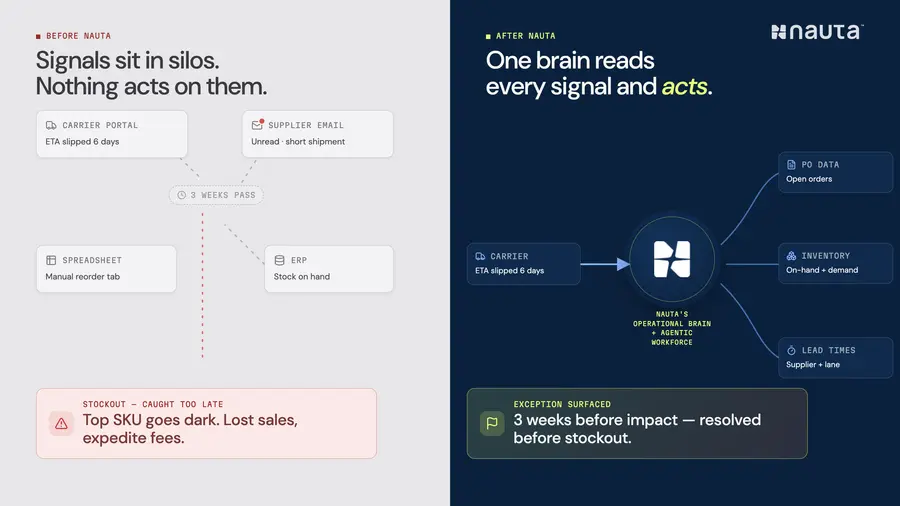
The Disruptions You Already Saw Coming: Why Supply Chain Signals Get Lost
Most disruptions are not invisible. The signal existed, it just never reached the person who could act on it. That is an infrastructure problem, not a forecasting one.
Read more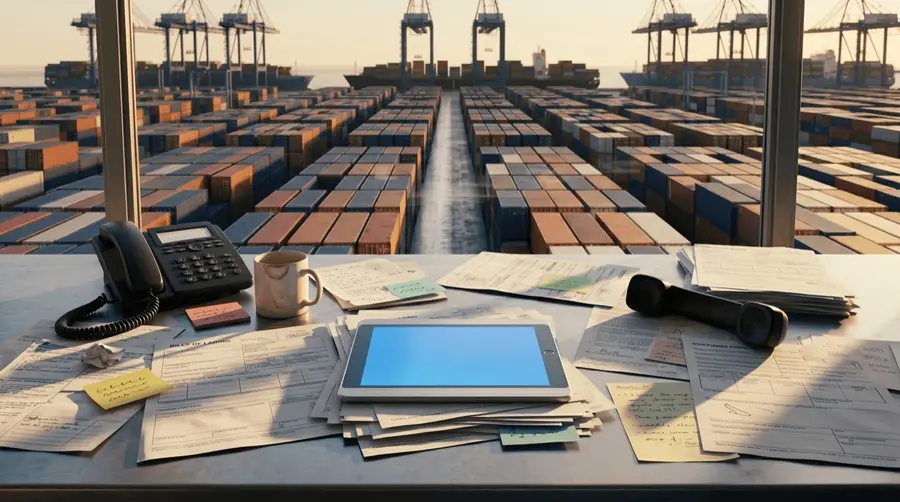
Unstructured Exception Management Is Driving Your Detention and Demurrage Costs
Unstructured exception management turns each disruption into a potential source of detention and demurrage costs that compound before anyone sees them coming.
Read more