Why Cash Flow Breaks Supply Chains (and How to Fix It)
Volatile tariff policies, rising costs, and global trade uncertainty have made cashflow the silent killer of importers — here is why it matters and how technology can help.
 Valentina Jordan CEO and Co-Founder of Nauta
Why is cashflow such a critical issue for businesses, particularly importers?
For any business, cash is essential to growth. New products, marketing campaigns, and market expansion all require capital. Without enough liquidity to fund day-to-day operations and invest in the future, companies risk stagnation.
Logistics and procurement teams understand this reality better than most. Often positioned as cost centers within organizations, these teams are tasked with reducing financial strain wherever possible. Yet the volatile tariff policies, rising costs, and uncertainty of global trade in 2025 have made it increasingly difficult for importers across markets to manage cashflow and preserve working capital.
Cashflow is becoming the silent killer of importers and navigating it will only grow more challenging for logistics leaders.
Can you explain why free cashflow is especially important for U.S. importers?
Let's start with U.S. importers, who are facing unique challenges due to erratic tariff policy. A U.S. importer typically purchases goods from an overseas supplier, arranges international shipping, and clears cargo through U.S. Customs by paying applicable duties and tariffs. Once cleared, the goods move into a warehouse or distribution center before reaching customers.
Each step requires capital before revenue is collected. Cashflow is more than profitability on paper—it's about whether money is available at critical moments to pay suppliers, cover freight, and handle duties. For importers, cashflow health determines whether the business can keep goods moving or risk costly supply chain breakdowns.
What are some of the biggest pressures straining liquidity for smaller importers?
For importers across the U.S., liquidity is under strain—especially for smaller firms with limited diversification or access to credit. There are a few key reasons we've seen smaller firms struggle with cash flow in the past year, including but not limited to: Tariff volatility and delivery delays forcing firms into defensive strategies like bonded storage, which is costly.
Tight profit margins, with many importers being forced to absorb tariff-related costs rather than passing them along.
Bonded warehouses give importers the ability to postpone duty payments until the product is sold. However, demand has pushed costs to nearly four times normal storage rates, while application backlogs with Customs create further complications.
To outright avoid tariff hikes or disruptions, some importers have chosen to bring in goods earlier than needed, referred to as frontloading. While this reduces the risk of shortages, it also raises warehousing and freight costs and ties up significant capital in inventory.
How can technology help importers better manage these cashflow challenges?
For importers, cashflow bridges the gap between upfront costs and delayed customer payments. Managing this cycle is critical to maintaining stability.
Technology cannot eliminate the uncertainty caused by tariffs or global trade shifts, but it can help companies navigate liquidity challenges more effectively.
We saw the financial strain that frontloading can put on importers up close. A U.S. importer sourcing from Asia used frontloading to prevent stockouts but tied up millions in inventory. By modeling costs and timing, Nauta helped the company with predictive intelligence insights to refine its strategy, reducing warehouse overflow and increasing margins.
Cashflow constraints are a global problem for parties throughout the supply chain. Having the right technology and the right data can be the difference between achieving operational flexibility for your business or being tied to short-term credit.
For example:
A Colombian manufacturer importing machinery faced delays that tied up over $2 million in capital overseas and stalled production at home. With greater visibility into shipment and cash flow, the company was able to forecast liquidity needs earlier and cut reliance on short-term credit by 30 percent.
A Caribbean food importer faced perishable risk as late shipments meant spoilage, and early arrivals created warehousing bottlenecks. Richer data allowed them to improve reliability and on-shelf availability, ultimately preserving margins and an important customer relationship.
What is the strategic takeaway for companies managing supply chains today?
Cashflow is not an accounting detail, it is the oxygen of global trade. For U.S. importers, the pressure from tariffs, delays, and rising costs threatens liquidity even in otherwise profitable businesses.
Survival will depend on treating cashflow as a strategic priority. This means balancing traditional tactics, such as bonded storage, with advanced forecasting tools that bring clarity to financial decision-making. Companies that elevate cashflow management from a back-office function to a core business strategy will be better positioned to withstand disruption and continue growing.
Need help with managing cashflow? Reach out to Nauta's team to learn more: nauta@pluckpr.com
Frequently Asked Questions
Why is cashflow considered the silent killer of importers?
Cashflow is the silent killer of importers because volatile tariff policies, rising costs, and global trade uncertainty in 2025 have made it increasingly difficult to preserve working capital. Logistics and procurement teams, often treated as cost centers, are tasked with reducing financial strain, yet each step of importing demands capital before revenue arrives. Without enough liquidity to fund daily operations and future investment, otherwise profitable companies risk stagnation.
Why is free cashflow especially important for U.S. importers?
Free cashflow is especially important for U.S. importers because every step of importing requires capital before any revenue is collected. An importer purchases goods overseas, arranges international shipping, and clears cargo through U.S. Customs by paying duties and tariffs, all before the goods reach customers. Cashflow health, not paper profitability, determines whether the business can keep goods moving or face costly supply chain breakdowns, and erratic tariff policy makes that pressure sharper.
What pressures are straining liquidity for smaller importers?
Smaller importers face strained liquidity from tariff volatility and delivery delays that push them into costly defensive strategies. Tight profit margins force many to absorb tariff-related costs rather than pass them along, while bonded warehouses that postpone duty payments have seen demand drive costs to nearly four times normal storage rates, plus Customs application backlogs. Some importers also frontload goods earlier than needed, which reduces shortage risk but raises warehousing and freight costs and ties up significant capital in inventory.
How can technology help importers manage cashflow challenges?
Technology cannot eliminate tariff or trade uncertainty, but it can help importers navigate liquidity challenges by modeling costs and timing to guide decisions. In one case, a U.S. importer sourcing from Asia had tied up millions in inventory through frontloading, and Nauta used predictive intelligence to refine that strategy, reducing warehouse overflow and increasing margins. The right technology and data can be the difference between operational flexibility and being tied to short-term credit.
How did Nauta help a Colombian manufacturer manage cashflow?
A Colombian manufacturer importing machinery faced delays that tied up over $2 million in capital overseas and stalled production at home. With richer shipment and cashflow data, the company was able to forecast its liquidity needs earlier and act on them. That allowed it to cut reliance on short-term credit by 30 percent.
What is the strategic takeaway for companies managing supply chains today?
The strategic takeaway is that cashflow is not an accounting detail but the oxygen of global trade, and it must be treated as a core business strategy rather than a back-office function. For U.S. importers, pressure from tariffs, delays, and rising costs threatens liquidity even in profitable businesses. Companies that pair traditional tactics like bonded storage with advanced forecasting tools will be better positioned to withstand disruption and keep growing.
Keep reading

September 2026
The Foundation Problem: Why AI Pilots in Global Trade Keep Failing
Nauta’s Valentina Jordan, writing for Talking Logistics, on why AI pilots in global trade stall before production — and what a foundation-first, compounding approach looks like instead.
Read more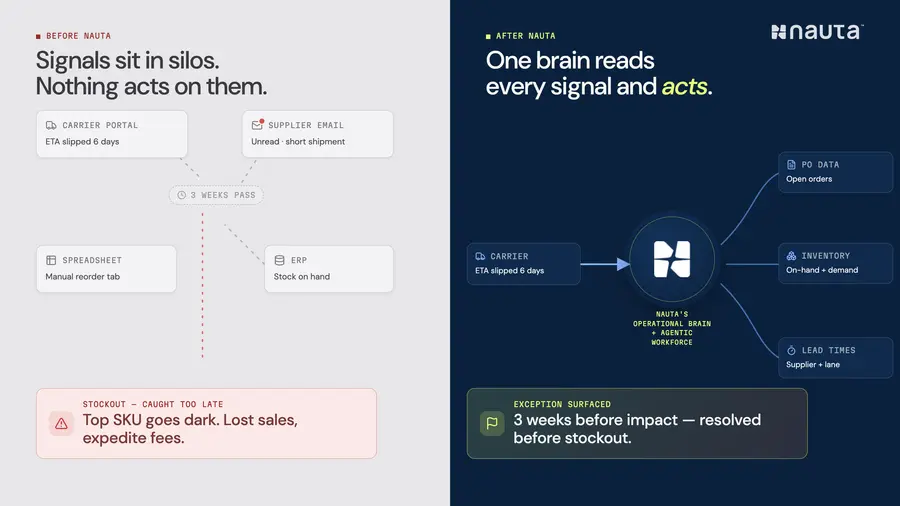
The Disruptions You Already Saw Coming: Why Supply Chain Signals Get Lost
Most disruptions are not invisible. The signal existed, it just never reached the person who could act on it. That is an infrastructure problem, not a forecasting one.
Read more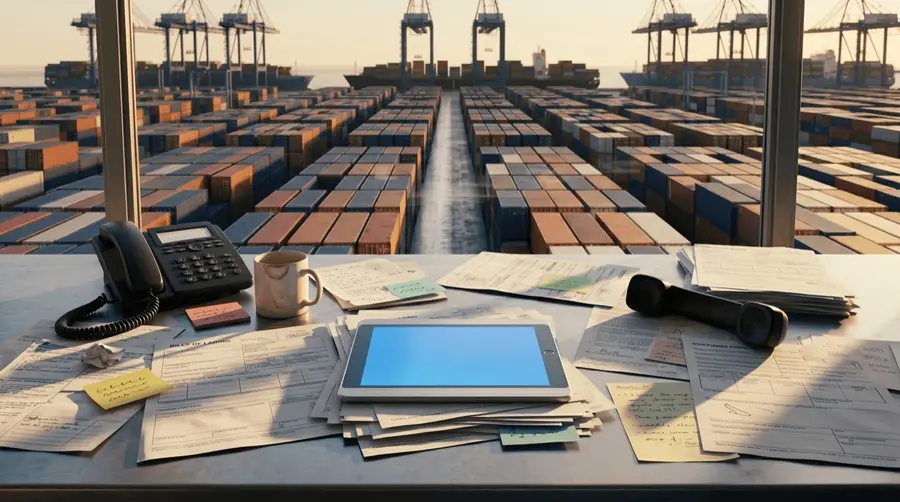
Unstructured Exception Management Is Driving Your Detention and Demurrage Costs
Unstructured exception management turns each disruption into a potential source of detention and demurrage costs that compound before anyone sees them coming.
Read more