How AI Is Finally Giving Procurement Real-Time Inventory Intelligence
Procurement teams are making million-dollar decisions in the dark — and AI-powered data normalization is finally connecting supply chain and logistics at the inventory level to give them visibility and control they've never had.
 Valentina Jordan CEO and Co-Founder of Nauta
Procurement teams are making million-dollar decisions in the dark. They're choosing suppliers, negotiating volume commitments, and hedging against risk without the clean, accurate SKU-level data or predictive decision-making capabilities they need. The costs add up fast: supplier penalties, emergency freight charges, and lost sales from stockouts.
While there's immense hype around AI's potential in global supply chains, the most practical application addresses a bleeding pain for importers: inventory management. Companies are in the business of moving goods, not containers or trailers, which means SKU-level control is what matters most. AI-powered data normalization is finally making it possible to connect supply chain and logistics at the inventory level - unifying fragmented information from ERPs, warehouse management systems, and purchase orders to give procurement teams visibility and control they've never had before.
The Data Problem Holding Procurement Back
Most procurement teams operate across multiple systems that don't talk to each other. An ERP tracks purchase orders. A WMS manages warehouse stock. A TMS shows in-transit shipments. Each system has its own data structure, its own SKU naming conventions, and its own version of the truth.
The impact is measurable. According to the Institute for Supply Chain Management, the average Fortune 500 importer hits only 85-90% fill rates. The IHL Group estimates stockouts cost U.S. retailers $82 billion annually. These gaps stem from fragmented systems: reconciling data requires manual effort, and by the time someone compiles a usable report, it's already stale.
The result is that procurement decisions get made in a fog. Teams can't answer basic questions with confidence: Which SKUs are running low? Where are potential shortages going to hit first? How much safety stock do we actually need? What's the real lead time for a given supplier right now?
Without clean, structured SKU-level data and predictive insights, procurement defaults to reactive mode. They respond to stockouts after they happen. They pay premium rates for expedited shipments. They over-order to create a buffer, tying up working capital and increasing waste. The hidden costs are enormous, but they've been treated as unavoidable.
Data is Power. Data is Freedom.
AI is solving the data problem by normalizing and structuring information across all these disparate systems. Instead of waiting for weekly reports or manually reconciling spreadsheets, procurement teams can now access a unified view of their inventory position in real time, down to the SKU-level.
This isn't just faster reporting. It's a fundamentally different way of operating. When procurement can see inventory movement as it happens, they gain options they never had before.
SKU-level control of your data helps procurement to make smarter supplier decisions. If a supplier consistently delivers late or ships incomplete orders, that shows up immediately in inventory data. Procurement can quantify the cost of those delays, use that information in negotiations, or shift volume to more reliable partners. The data becomes leverage. Armed with performance metrics, procurement teams can negotiate better payment terms based on actual delivery performance, which improves cash flow and liquidity for inventory management.
It changes how teams manage risk. Instead of building excess safety stock across the board, procurement can identify which SKUs are actually at risk and where constraints are likely to appear. They can adjust replenishment schedules, reroute inventory from low-risk regions, or accelerate orders for specific products before shortages hit. Risk management becomes targeted and cost-effective.
It also transforms capacity planning. During peak seasons or when tariff policies shift, procurement needs to move fast. Real-time inventory intelligence shows them exactly where they have headroom and where they're exposed. They can make decisions about volume commitments, allocation strategies, and supplier awards based on current conditions rather than historical averages.
How Companies Are Putting This Into Practice
A packaging materials manufacturer supplying pharmaceutical companies recently used AI-powered inventory visibility to anticipate SKU shortages weeks before they would have been caught by traditional reporting. By acting early, the company avoided supplier penalties and preserved more than $1.2 million in revenue in a single quarter.
A residential solar contractor in the Caribbean used real-time inventory intelligence to improve fill rates by 1.3%, resulting in hundreds of thousands of dollars in protected revenue. For a company where a single stockout can delay customer installations and trigger financial penalties, the ability to see inventory risk in real time made the difference between hitting service levels and falling short.
These outcomes become possible when procurement teams have the data infrastructure to support proactive decision-making.
The Foundation: Unified Data Infrastructure
The key to making AI useful for procurement is starting with clean, structured, harmonized data. Predictive models are only as good as the information they're trained on. If the underlying data is fragmented, inconsistent, or incomplete, the AI will produce unreliable outputs.
Gartner research found that "up to 80% of actual supply chain processes are not even reflected" in current systems. This gap between what systems show and what's actually happening on the ground is why many procurement teams still struggle despite significant technology investments.
What procurement needs is a unified data infrastructure layer that integrates information from every system and structures it at the product level. That means normalizing SKU identifiers, reconciling inventory counts across locations, tracking shipments in real time, and connecting purchase orders to actual stock positions.
Once that foundation is in place, AI can deliver actionable insights. It can flag SKUs likely to run short, recommend replenishment timing, surface supplier performance issues, and highlight allocation opportunities.
What's Next for Procurement
The procurement teams adopting AI-powered inventory intelligence today are gaining a competitive advantage. They're reducing costs, improving service levels, and making faster, more confident decisions. As this technology becomes more accessible, it will stop being an advantage and start being a requirement.
The future of procurement isn't about replacing human decision-makers. It's about giving them better tools. Teams will spend less time reconciling spreadsheets and hunting for information, and more time executing strategies that reduce risk and strengthen supplier relationships.
For procurement leaders, the question isn't whether to adopt real-time inventory intelligence. It's how quickly they can build the data infrastructure to support it. The procurement teams that move first will set the standard. The ones that wait will be left trying to compete with outdated tools in an environment that demands speed, precision, and control.
Frequently Asked Questions
Why do procurement teams make million-dollar decisions in the dark?
Most procurement teams operate across systems that do not talk to each other: an ERP tracks purchase orders, a WMS manages warehouse stock, and a TMS shows in-transit shipments, each with its own SKU naming and its own version of the truth. Without clean, structured SKU-level data, procurement defaults to reactive mode, responding to stockouts after they happen, paying premium expedited rates, and over-ordering to create a buffer. The hidden costs, from supplier penalties to lost sales, have long been treated as unavoidable.
How much do fragmented inventory systems cost companies?
According to the Institute for Supply Chain Management, the average Fortune 500 importer hits only 85 to 90 percent fill rates. The IHL Group estimates that stockouts cost U.S. retailers 82 billion dollars annually. These gaps stem from fragmented systems, where reconciling data requires manual effort and any usable report is already stale by the time it is compiled.
How does AI-powered data normalization help procurement?
AI normalizes and structures information across ERPs, warehouse management systems, and purchase orders, unifying fragmented data at the SKU level. Instead of waiting for weekly reports or reconciling spreadsheets by hand, procurement teams can access a unified inventory position in real time. That lets them make smarter supplier decisions, target risk to the specific SKUs actually exposed, and plan capacity on current conditions rather than historical averages.
How does SKU-level data become negotiating leverage for procurement?
When a supplier consistently delivers late or ships incomplete orders, that shows up immediately in inventory data. Procurement can quantify the cost of those delays and use it in negotiations, shift volume to more reliable partners, or negotiate better payment terms based on actual delivery performance. The data becomes leverage that also improves cash flow and liquidity for inventory management.
What results have companies seen from real-time inventory intelligence?
A packaging materials manufacturer supplying pharmaceutical companies anticipated SKU shortages weeks before traditional reporting would have caught them, avoiding supplier penalties and preserving more than 1.2 million dollars in revenue in a single quarter. A residential solar contractor in the Caribbean used real-time inventory intelligence to improve fill rates by 1.3 percent, protecting hundreds of thousands of dollars in revenue where a single stockout can delay installations and trigger penalties.
Why is clean, structured data the foundation for useful AI in procurement?
Predictive models are only as good as the information they are trained on, so fragmented, inconsistent, or incomplete data produces unreliable outputs. Gartner research found that up to 80 percent of actual supply chain processes are not even reflected in current systems. Procurement needs a unified data infrastructure that normalizes SKU identifiers, reconciles inventory counts across locations, and connects purchase orders to actual stock positions before AI can reliably flag shortages or recommend replenishment.
Keep reading
June 2026
Nauta Named One of the Top 10 Supply Chain Startups of 2026
Nauta has been named one of the Top 10 Supply Chain Startups of 2026 by Supply Chain Digital, a recognition that places the company among the teams reshaping how global supply chains operate.
Read more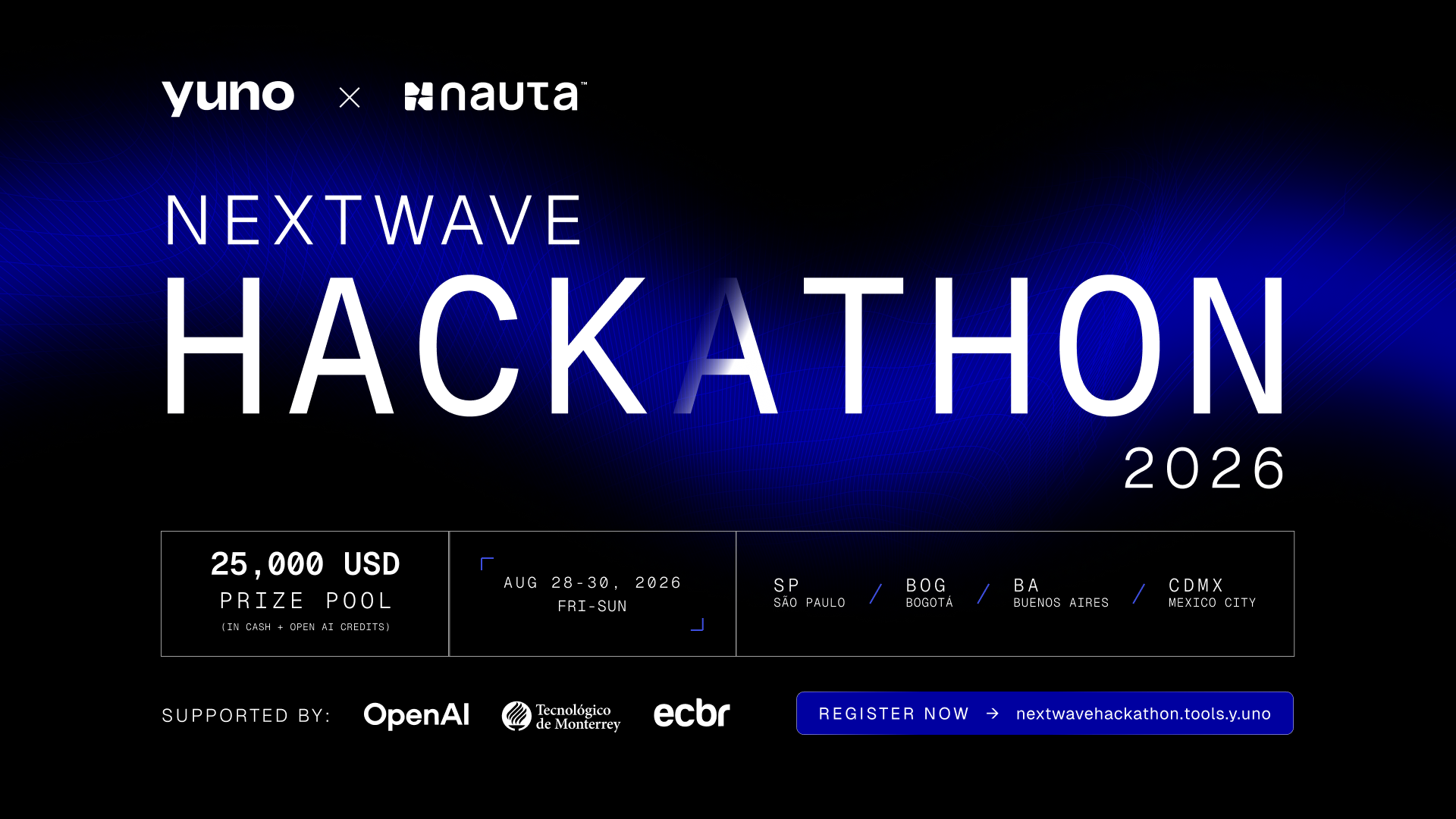
July 2026
NextWave 2026: AI Hackathon Across Four LATAM Cities
Nauta and Yuno bring NextWave 2026 to Bogota, Mexico City, Buenos Aires and Sao Paulo on August 28 to 30. Free entry, 25,000 USD in prizes, OpenAI API access for every builder.
Read more
February 2026
Nauta and Pepper Partner to Give Independent Food Distributors a Complete AI Stack
Nauta and Pepper are partnering to give independent food distributors a complete AI stack — covering the full operational picture, from how orders come in to what happens upstream in the supply chain.
Read more