Nauta Launches Tariff Recovery Module to Help Shippers Calculate Exposure and Accelerate Refund Claims
The U.S. Supreme Court's decision to strike down tariffs implemented under the IEEPA is a significant win for importers — but the refund process that follows will be anything but simple, and the companies that move first will recover the most.
 Valentina Jordan CEO and Co-Founder of Nauta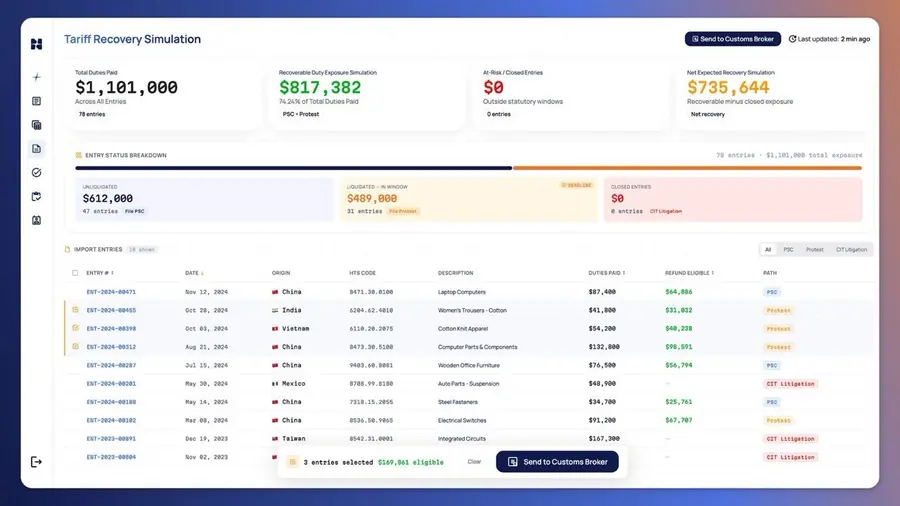
Company News
The U.S. Supreme Court's decision to strike down tariffs implemented under the IEEPA is a significant win for importers. But the refund process that follows will be anything but simple and the companies that move first will recover the most.
Customs data is scattered. Duty payment records live in one system, shipment history in another, product classifications somewhere else. For most shippers, assembling a complete, accurate picture of their tariff exposure let alone packaging it in a format their customs broker can act on could take weeks of manual work. We built the Nauta Tariff Recovery Module to change that.
What the Module Does
The Tariff Recovery Module automatically calculates a shipper's total tariff exposure and generates a complete, broker-ready data package in minutes not weeks.
Because Nauta already integrates and structures a shipper's data across ERP, transportation, warehouse, and trade documentation systems, the module can connect historical shipment records, product classifications, duty payments, and commercial documentation into a single harmonized dataset. From there, it identifies every affected shipment down to the SKU level, so nothing gets missed and no claims get left on the table.
The resulting data package can be delivered directly to your customs broker via API, SFTP, EDI, or direct download however they need to receive it.
The Real Problem: Fragmented Data
Most importers don't have a unified view of their customs, logistics, and product data. That fragmentation makes it genuinely difficult to determine eligibility, quantify claims, and hit filing timelines even when the opportunity is clear.
That's exactly what Nauta solves. By consolidating fragmented supply chain data into a single intelligence layer, we give customers the ability to see what they're owed, document it accurately, and get their brokers working immediately.
The companies that will recover the most value from this decision will be the ones that can quantify their exposure immediately and provide their brokers with complete, accurate data.
Shippers already have the information required to act, but it is often fragmented across systems and documents. Even before today's ruling, Nauta has given its customers the power of their own data, by structuring it into a single source of truth so they can move quickly and confidently.
Part of a Broader Platform
The Tariff Recovery Module is the latest addition to Nauta's platform, following the launch of the Nauta Inventory Optimization Engine. Both reflect the same core principle: when your supply chain data is clean, connected, and structured, you're no longer reacting you're in control.
Whether the goal is accelerating tariff recovery, strengthening inventory planning, or increasing cash flow, it all starts with having your data in one place.
Frequently Asked Questions
What is the Nauta Tariff Recovery Module?
The Nauta Tariff Recovery Module automatically calculates a shipper's total tariff exposure and generates a complete, broker-ready data package in minutes rather than weeks. It connects historical shipment records, product classifications, duty payments, and commercial documentation into a single harmonized dataset, then identifies every affected shipment down to the SKU level so no refund claim is left on the table.
Why is claiming tariff refunds after the IEEPA ruling so hard?
The refund process is difficult because customs data is scattered: duty payment records live in one system, shipment history in another, and product classifications somewhere else. For most shippers, assembling a complete, accurate picture of their tariff exposure, let alone packaging it in a format a customs broker can act on, can take weeks of manual work. The companies that move first will recover the most, so that delay is expensive.
How does Nauta calculate my total tariff exposure?
Because Nauta already integrates and structures a shipper's data across ERP, transportation, warehouse, and trade documentation systems, it can connect duty payments, shipment records, and classifications into one harmonized dataset and quantify exposure automatically. It identifies every affected shipment at the SKU level, so eligibility and claim value are calculated from the shipper's own data rather than reconstructed by hand.
How does the module get data to my customs broker?
The resulting data package can be delivered directly to your customs broker via API, SFTP, EDI, or direct download, whichever way they need to receive it. Because the data is already structured and broker-ready, your broker can begin working on the claim immediately instead of waiting on manual reconciliation.
Why does fragmented customs data cost importers refund money?
Most importers do not have a unified view of their customs, logistics, and product data, which makes it genuinely difficult to determine eligibility, quantify claims, and hit filing timelines even when the opportunity is clear. Nauta closes that gap by consolidating fragmented supply chain data into a single source of truth, so importers can see what they are owed, document it accurately, and file on time.
Keep reading

August 2026
BMW i Ventures, Bosch Ventures, Hitachi Ventures & Yamaha Motor Ventures Lead Strategic Investment in Nauta
Four of the world’s leading corporate venture arms — BMW i Ventures, Bosch Ventures, Hitachi Ventures, and Yamaha Motor Ventures — lead a strategic investment in Nauta, the operational brain powering autonomous AI agents for global trade, with participation from existing investors Construct Capital and Predictive.
Read more
June 2026
Nauta Named One of the Top 10 Supply Chain Startups of 2026
Nauta has been named one of the Top 10 Supply Chain Startups of 2026 by Supply Chain Digital, a recognition that places the company among the teams reshaping how global supply chains operate.
Read more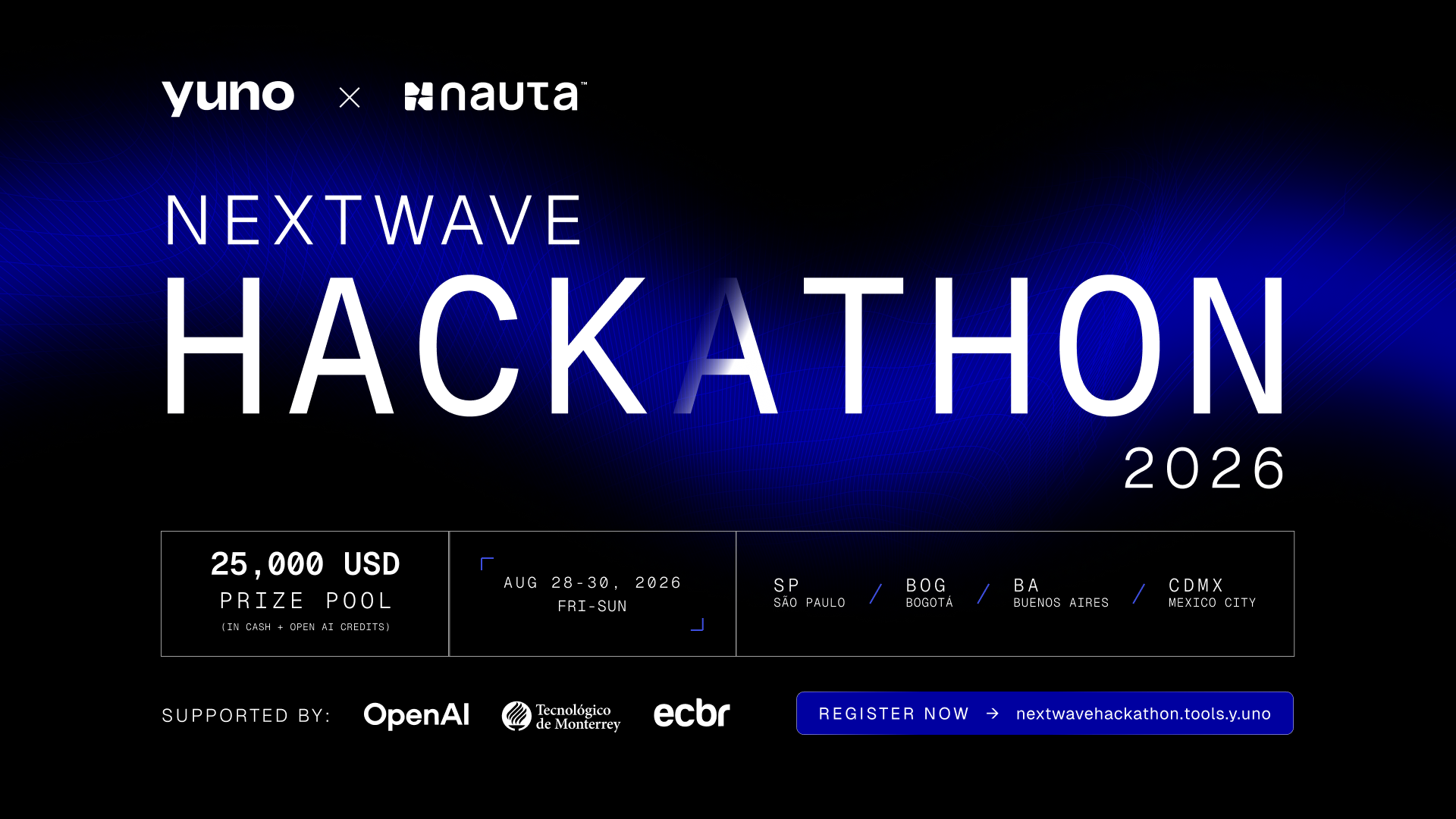
July 2026
NextWave 2026: AI Hackathon Across Four LATAM Cities
Nauta and Yuno bring NextWave 2026 to Bogota, Mexico City, Buenos Aires and Sao Paulo, August 28 to 30. Free entry, 25,000 USD in prizes, OpenAI API access.
Read more